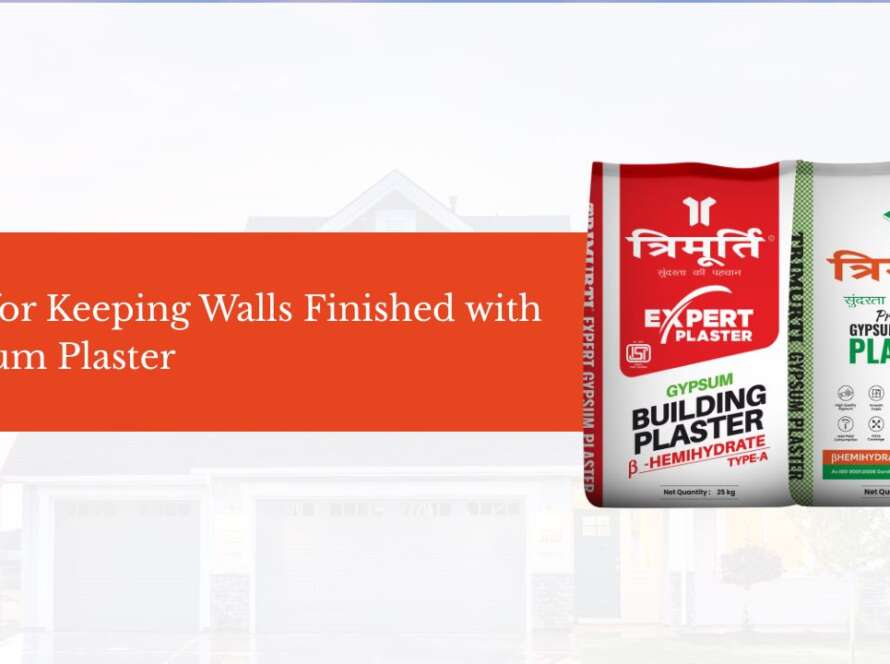
It all comes down to that final, finishing touch. All the hard work you put into your walls decides how everything looks in the end. But how do you make absolutely sure your walls turn out exactly the way you pictured them? The secret is picking a quality wall finish. That’s what gives you that perfect, smooth, and beautiful look.
Getting the right wall finish is all you need for that smooth and perfect look. When you pick a great wall product, you get the perfect canvas, and that makes all your painting and decorating efforts really stand out.
This blog will take you through why choosing the right wall finish matters and the key differences that set gypsum plaster apart from traditional plaster.
Why Choosing the Right Wall Finish is Important
Want a stylish look? Good wall finishes are key. They really set the mood and make your space look awesome. With so many finishes out there, it’s easy to pick one that fits your overall design, the colors you want, and the vibe you’re going for. Getting high-quality wall finishes is important, and picking one from a top supplier means you’ll definitely get the perfect look for your place.
Your wall finishes ultimately define the interior of your home. It’s important that they match your vision so that the final look is seamless.
Earlier homeowners used traditional plaster for their walls, which is basically a mix of cement and sand. It needs time to cure and often leads to cracks down the line. This has changed significantly with the use of a new wall finish, which is gypsum plaster. It makes the application easier and quicker, giving you a smooth finish right away.
Gypsum Plaster Vs. Traditional Plaster: What are the Key Differences
To make sure you choose the right wall finish, it’s important to understand the key differences between traditional plaster and gypsum plaster. It allows you to make the right selection and choose the right one. You ensure that you give your walls the right quality finish.
Here are the key differences between traditional plaster and gypsum plaster:
| Features | Gypsum Plaster | Traditional Plaster |
| Time to Cure | Sets in 30–45 minutes; fully dry in 2–3 days. | Typically requires several days to set and weeks to cure. |
| Installation | Quick & dry installation saves your construction time. | A labor-intensive process involving mixing sand, cement, and water. |
| Weight | Has a lightweight construction, which reduces the structural load. | It’s a heavier material and adds more weight to the structure. |
| Finish | Gets you a smooth finish, which is ideal for decorative work. | Often requires a secondary coat of putty for a smooth finish. |
| Curing | Does not require water curing after application. | Requires extensive water curing for several days to gain strength. |
| Usage | Suitable for internal plastering, punning, and decorative mouldings. | Standard for both internal and external heavy-duty walls. |
| Cost | Proves to be cost-effective with extra coverage and impurity-free features. | High material wastage and higher labor costs due to multiple steps. |
What are the Key Advantages of Gypsum Plaster Over Traditional Plaster?
To make sure your walls are smooth and even, having the right wall finish is paramount. Gypsum plaster makes it possible for you to have a smooth texture, allowing for a beautiful, paint-ready surface right away.
When you buy from a leading manufacturer of gypsum plaster, you ensure that your walls turn out just the way you want. Its unique chemical composition and qualities make it easy for your walls to get a smooth base for plastering.
Here are some of the key benefits of wall finish:
-
Faster Drying & Setting
It sets within 30–45 minutes and fully dries in just 2–3 days. This is significantly faster than traditional plaster, which requires weeks to cure. You ensure that you can proceed with painting and decorating much sooner, speeding up your entire construction project significantly.
-
No Water Curing Required
What better way to conserve water and labor? Gypsum plaster requires absolutely no water curing after application. Unlike traditional plaster, which needs to be kept wet for several days to gain strength, gypsum plaster is a “dry installation” process that saves water and labor.
-
Superior Finish
It provides a naturally smooth, white finish that is ideal for high-quality painting on walls and ceilings. It also results in less paint consumption because the surface is less porous. You can rest assured for a smooth and uniform base for painting, offering a truly superior aesthetic appeal and overall wall performance.
-
Lightweight Construction
You don’t want something that adds unnecessary load to your structure. Gypsum is a lightweight material which helps in reducing the overall structural load on the building compared to heavy sand-cement mixes. This reduction in weight can be beneficial for structural integrity.
-
Crack Resistance
Over time, traditional plaster can develop cracks, but gypsum plaster’s composition makes it much more resistant to shrinkage and cracking over time. It is described as being impurity-free and less prone to the shrinkage cracks that commonly affect traditional cement plaster.
-
Time & Cost Efficiency
Those who are looking for a quick and high-quality wall finish should choose gypsum plaster. It’s faster, smoother, and totally worth the switch. Since it is easy to apply and eliminates the curing stage, it is highly favorable to construction teams looking to save time and reduce overall costs.
-
Versatility
It is specifically designed for decorative work, including cornices, mouldings, and arches, which are difficult to achieve with standard cement plaster. Be it intricate patterns or a flawless, smooth surface, gypsum offers superior workability. This way, you ensure that your walls get a perfect and smooth finish.
How to Increase the Durability of Gypsum Plaster for a Smooth Wall Finish?
Gypsum plaster gives you that clean and smooth appearance that makes your walls stand out. By using the right product sourced from trusted suppliers like Trimurti Products, you ensure that the finish lasts longer by adhering to best application practices.
Here are some key practices to increase the durability of the gypsum plaster:
- Prepare the Surface
Make sure the wall is clean. No dust, oil, or bits should be floating around. Scratching up a super smooth wall helps the plaster stick better. A good and clean start is key to making sure the plaster lasts and doesn’t peel off too soon.
- Mix it Right
Always use the prescribed amount of water. Use a mechanical mixer to get a smooth and even paste. Incorrect mixing, either too wet or too dry, can compromise the plaster’s final strength, setting time, and overall resistance.
- Correct Thickness Application
Make sure to apply the gypsum plaster to the recommended thickness. A lawyer that is too thin won’t cover well, and the finish will look bad. Excessively thick layers, on the other hand, will cause cracking.
- Let it Dry Slowly
Keep the fresh plaster away from things that make it dry too fast, like bright sun, strong breezes, or high temperatures. Letting it dry slowly helps it achieve its maximum hardness and crack resistance.
- Sealing and Painting
Once it’s totally dry, put on a quality primer or sealer before the final coat of paint. The primer soaks into the gypsum, which helps the paint stick and stops the plaster from absorbing too much paint.
- Moisture Management
Gypsum plaster is best for dry spots. To keep it looking great, fix any leaks or dampness right away. Avoid using gypsum plaster in wet areas where it will be consistently exposed to high moisture levels.
Key Specifications to Look for in the Right Gypsum Plaster
Before you go on to choose one for your walls, you have to make sure that your selection matches your vision. You get to ensure that your walls look all smooth and vibrant at the end of the way.
Here’s what you need to look for in a quality gypsum plaster:
- Weight
Look for a weight formulation of 17 to 17.2 kg that balances density with ease of handling. The lightweight nature reduces the structural load on high-rise buildings while ensuring effortless transport across construction sites.
- Thickness
To achieve a flawless and level finish, make sure the gypsum plaster has a thickness of 12 to 12.5 mm. This optimal depth provides you with a sturdy protective layer that masks the imperfections of the wall, creating a smooth canvas.
- Strength
A plaster that boasts high strength is your go-to for resisting daily wear and tear. The robust composition will ensure long-term durability, preventing any cracks and maintaining the structural integrity of decorative surfaces.
- Quick Installation
You don’t wait for long periods of time. Look for a compound that offers quick and dry installation with a setting period of 30 to 45 minutes. This streamlines your construction workflow, allowing you to complete your project faster without compromising quality.
Trimurti Products: Wall Finishing Solutions for Every Project
If you’re looking for wall finishing solutions, then we at Trimurti Products are the perfect choice. Our range of high-quality gypsum plasters guarantees a smooth, durable, and paint-ready finish every time. Here are some of our gypsum plaster solutions, you can rely on:
-
Premium Gypsum Plaster
Our Premium Gypsum Plaster is ideal for internal plastering on walls, ceilings, and various decorative applications. Its slow hardening time, superior coverage, and purity are significant advantages for construction teams, contributing to time savings.
-
Expert Gypsum Plaster
Our Expert Gypsum Plaster offers a superior solution for interior walls, delivering smooth, durable, and crack-free finishes. This premium product is formulated using the finest gypsum, which ensures exceptional bonding and enhanced workability.
-
Silk Gypsum Plaster
Our Silk Gypsum Plaster offers a professional-grade, eco-friendly solution for flawless interior finishes. Crafted from high-purity silk gypsum powder, it ensures superior adhesion and a smooth and crack-free application on a variety of surfaces.
-
One Coat Gypsum Plaster
Our One Coat Gypsum Plaster offers a premium solution for construction and renovation. Enriched with vermiculite, this plaster provides excellent thermal insulation and enhanced durability.
Make Your Walls Flawless with Trimurti Products
We at Trimurti Products have been a reliable and trusted supplier of wall care products for the past two decades. What makes us a trusted supplier is our dedication to quality wall care products. We are committed to offering wall solutions that match the aesthetic needs of modern houses while not compromising on quality.
We have been redefining the wall care industry, setting the bar for reliable and quality products. Our products are made with meticulous attention to detail, ensuring they are of top-notch quality and never fail to meet your expectations. As one of the leading wall care products manufacturers, we ensure that your walls get the smooth, vibrant finish they deserve. Choose Trimurti Products for a durable and perfect finish.
Frequently Asked Questions (FAQs)
- How does the setting time of gypsum plaster compare to traditional cement-sand plaster?
Gypsum sets in 30–45 minutes and dries in 2–3 days, whereas traditional plaster takes several days to set and weeks.
- Is water curing necessary for gypsum plaster after it has been applied?
No, gypsum plaster requires absolutely no water curing, saving significant labor and water compared to the extensive curing traditional plaster needs.
- Which plaster provides a better surface for painting and decorative finishes?
Gypsum plaster provides a naturally smooth, white, and uniform finish, making it ideal for high-quality painting and intricate decorative work.
- How does using gypsum plaster affect the weight of a building’s structure?
Gypsum is a lightweight material that reduces the overall structural load on buildings compared to heavy, traditional sand-cement plaster mixes.
- Is gypsum plaster more resistant to cracking than traditional cement plaster?
Yes, its unique chemical composition makes it impurity-free and highly resistant to shrinkage cracks that commonly affect traditional cement-sand plaster.
- Can gypsum plaster be used for both internal and external wall applications?
Gypsum plaster is specifically designed for internal plastering and decorative moldings; traditional plaster remains the standard for heavy-duty external walls.
- How does gypsum plaster contribute to project time and cost efficiency?
It eliminates the curing stage and offers quick installation, allowing construction teams to save time and reduce overall labor costs.
- What is the recommended thickness for applying gypsum plaster for a flawless finish?
For a sturdy protective layer that masks imperfections, it is recommended to apply gypsum plaster at a thickness of 12–12.5mm.
- What precautions should be taken regarding moisture when using gypsum plaster?
Gypsum plaster is suitable for dry areas only; ensure moisture management by addressing leaks immediately and avoiding consistently wet environments.
- What is the benefit of One Coat Gypsum Plaster from Trimurti Products?
One Coat Gypsum Plaster, often enriched with vermiculite, provides excellent thermal insulation and enhanced durability for modern construction and renovation.