Your tiles are literally the heart of your home. These decorative pieces highlight your space. But do you know what holds them together so that they won’t drift apart? It’s the grout, and choosing the wrong type can ruin the look and cause long-term headaches. The debate often comes down to two options. It’s either an epoxy grout or a cement grout.
Deciding on the ideal material for your home often leaves homeowners weighing the pros and cons of different options. The final choice usually hinges on finding the right balance between lasting durability, visual appeal, and the amount of effort required for long-term upkeep.
This blog will take you through the key differences between an epoxy grout and a cement grout and help you choose the best option for your tiles.
Why is Grouting Important for Tile Installation
When installing tiles, you simply cannot put them there and expect a polished and aesthetic space. To make sure that the tiles get a better finish and they lock into one place, skipping the grout is not an option. Grout gives your tiles the stability needed to stay in one place and handle the high-traffic areas. This way, they can handle the constant daily pressure and won’t go through cracks over time.
Be it your bathroom, kitchen, or living room, grouting is basically what keeps everything together. It acts like a protective shield, stopping moisture and dirt from sneaking into those gaps. Beyond just being practical, it gives your entire space a clean and polished look. You ensure that your tiles stay in shape for years to come.
Key Applications of Grouting in Construction
Tiles are part of your floors, walls, and ceilings, so it’s quite normal to find them in places that deal with a lot of moisture or heavy foot traffic. This makes it important to opt for a reliable grouting material, as it holds everything together.
Here are some of its key applications:
- Floor Grouting
Helps maintain the alignment and stability of the tiles, ensuring a foundation that is both solid and smooth.
- Bathroom Grouting
Prevents water from seeping through the gaps between tiles and protects the walls from water damage.
- Kitchen Grouting
Keeps the tiles securely in place despite daily cooking spills and the hustle of busy meals.
Types of Grouts You Can Consider
To keep your tiles looking their absolute best, you’ll need to pick a grout that matches your home’s vibe. When you choose the right material, you ensure that your floors stay durable and easy to clean. It lets you enjoy a pristine and stylish home for years to come.
Given below are the types of grout you can consider:
- Cement Grout
You get a mixture of sand that helps to protect both your tiles and the surface within. Its moisture-locking properties stop water from penetrating the substrate and help align tile rows accurately.
- Epoxy Grout
The epoxy grout is made from two-part epoxy resins. These two are mixed with filler grouting powder. It comes equipped with its strong durability, non-porous, and stain-resistant nature.
Epoxy Grout Vs Cement Grout: Which One to Choose For Your Tiles
Picking the appropriate grout requires evaluating specific criteria to ensure long-term tile durability and a perfect fit for your project. Navigating the choice between epoxy and cement-based options can be complex. To assist your decision, the primary differences between these two materials are outlined below to help you identify the best solution for your tiling needs:
| Feature | Epoxy Grout | Cement Grout |
| Composition | Resin-based (two-part epoxy resins mixed with filler powder). | Traditional mixture of cement, sand, and water. |
| Porosity & Water Resistance | Completely non-porous and waterproof. It prevents moisture seepage. | Porous, absorbs liquids and requires regular sealing. |
| Stain & Mold Resistance | Highly stain-resistant and immune to mold/mildew growth. | Prone to staining and discoloration if left unsealed. |
| Durability | Extremely durable. It resists cracking, shrinking, and harsh chemicals. | Prone to cracking and wear under heavy usage over time. |
| Maintenance | Low maintenance. Easy to clean without special chemicals. | High maintenance. Requires periodic resealing (every 6–12 months). |
| Cost | Higher upfront material and professional installation costs. | Very budget-friendly and cost-effective for large projects. |
| Application | Complex. Requires professional installation due to fast setting time. | Easy to mix and apply. Highly suitable for DIY projects. |
Epoxy grout is pretty much the go-to for anyone who wants a finish that’s tough, waterproof, and doesn’t stain easily. Its properties, such as high-stain resistance and durability, ensure your tiles stay intact down the line.
What are the Benefits of Using Epoxy Grout for Tiles
When you choose an epoxy grout, you’re opting for a high-performance and non-porous tile joint filler. You ensure that you get a solution that offers water resistance, stain resistance, and extreme durability.
Here are some of the key benefits of using epoxy grout for your tiles:
- Waterproof Barrier
Epoxy grout is completely non-porous, meaning water won’t soak through your tile joints. It’s a total game-changer for bathrooms and kitchens where things tend to get a little wet.
- Super Stain-Resistant
Spilled some coffee or red wine? No problem! Epoxy grout doesn’t soak up spills, making it super easy to wipe clean so your floors always look fresh and new.
- Built to Last
This stuff is incredibly tough and resists cracking or shrinking over time. It’s designed to handle heavy foot traffic and daily wear, keeping your tiles looking solid forever.
- Mold-Free Zones
Mold and mildew just can’t get a foothold because it doesn’t absorb moisture. You’ll spend way less time scrubbing away grime and more time enjoying your clean home.
- Color Consistency
Unlike other types that might fade or get patchy, epoxy grout holds its color beautifully. It stays vibrant, giving your tiled area that perfect, polished look for years.
Step-By-Step Process to Apply Epoxy Grout for Tiles
Selecting the appropriate epoxy grout is vital, but the quality of the application is equally critical. To achieve a finish that is both robust and enduring, it is essential to follow the correct application procedures.
Here are some steps that you need to follow:
- Preparing the Surface
Make sure the surface is totally dry before you even start applying the grout. Make sure to get rid of any moisture, any glue, or any trash to ensure the grout sticks perfectly for a long-lasting finish.
- Mixing the Epoxy Grout
The following step involves combining the epoxy resin with the hardener according to the instructions provided by the manufacturer. Stir the mixture thoroughly to achieve a uniform, smooth paste that allows for effortless application.
- Application of Grout
Using a rubber squeegee or float, press the epoxy grout firmly into the joints until it is flush with the tile edges. Wipe away any excess material immediately with a damp sponge to prevent surplus water from interfering.
- Final Touches
As a concluding step, use a tidy, moistened sponge to gently eliminate any lingering residue once the grout begins its curing process. This critical final detail ensures your tiling achieves a sharp, sleek, and expert-level appearance for your home.
Explore the Trimurti Products’ Range of Epoxy Grout for Tiles
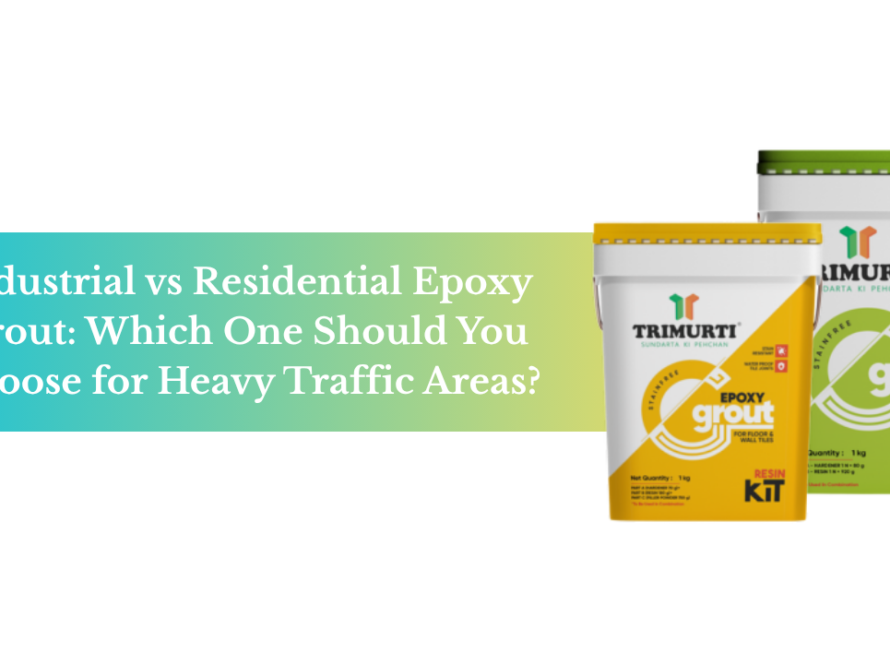
When you’re looking for a trusted manufacturer of epoxy grout, Trimurti Products is the one partner that you can easily trust. Our high-quality tile grout gives you a long-lasting finish, sealing every gap between your tiles. Be it your kitchen, bathroom floors, or commercial areas, our grout offers supreme strength and long-term performance.
More than anything, they are easy to apply, so you can rest assured for a seamless and hassle-free application. Given below is our range of epoxy tiles:
- Trimurti 2-Component Epoxy Grout
A durable and stain-resistant tile filler made of resin and hardener. It’s ideal for wet and high-traffic areas as it offers strong bonding and an easy-to-clean finish. You can rest assured for a seamless and waterproof finish that is ideal for your kitchen, bathroom, pools, or other industrial spaces. It’s available in both 1Kg and 5Kg variants to suit your needs and requirements.
- Trimurti 3-Component Epoxy Grout
Get access to our high-performance tile joint filler. Made with resin, hardener, and filler powder, this epoxy grout offers excellent bonding, stain resistance, and a seamless finish for your tiles. For areas that require chemical resistance and hygiene, this epoxy grout offers the right solution. Available in both 1Kg and 5Kg variants, this epoxy grout is perfect for your home.
Seal the Deal with Trimurti Products: Durability That Lasts a Lifetime
Don’t let your walls suffer from dull and cracking grout lines that drag down your home’s vibe. With our premium products, you can easily protect your space, ensuring your beautiful tiles stay looking sharp, clean, and perfectly sealed for years.
Our range of epoxy grout is designed to take the guesswork out of tile care. Ready to give your home the ultimate upgrade? Choose Trimurti Products today for a flawless and long-lasting finish that stands the test of time.
FAQs
- Why is grouting important when installing tiles?
Grouting provides essential tile stability, prevents cracks, and successfully blocks moisture or dirt from entering the gaps.
- What are the main differences between epoxy and cement grout?
Epoxy grout is highly waterproof and durable, while traditional cement grout is porous and requires regular sealing.
- Where should you use Trimurti 2-Component Epoxy Grout?
It is perfect for wet and busy areas like kitchens, bathrooms, swimming pools, and various industrial spaces.
- How often does traditional cement grout require maintenance and resealing?
Cement grout is highly porous and typically requires regular maintenance and resealing every six to twelve months.
- What materials make up Trimurti 3-Component Epoxy Grout?
This premium tile joint filler is formulated using a strong combination of resin, hardener, and filler powder.