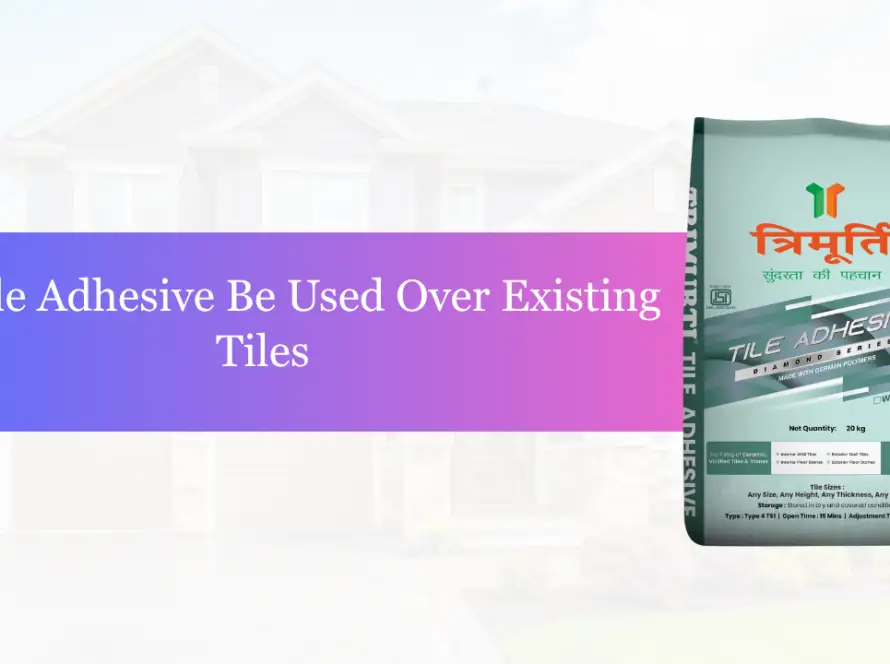
Tile adhesive is one of those materials that looks indestructible sitting in its bag, but it is actually quite sensitive to how it’s stored. Whether you’re a contractor stocking up for a large project or a homeowner with a few leftover bags after a renovation, understanding how to store your tile adhesive correctly can be the difference between a strong, long-lasting bond and a wasted, unusable batch.
This guide walks you through everything you need to know about storing tile adhesive properly, how long it actually lasts, and how to tell when it’s time to replace it.
Why Proper Storage of Tile Adhesive Matters?
Most tile adhesives sold in India, including cement-based and polymer-modified variants, are powder formulations. These are engineered with specific ratios of cement, sand, and performance-enhancing additives that give the adhesive its bonding strength, flexibility, and water resistance. The moment moisture finds its way into the bag, that careful chemistry starts to break down. Even a small amount of humidity can trigger a reaction inside the packaging, causing the powder to lump, harden, or lose its workability long before you ever get to use it.
This is why storage isn’t just a “nice to have”, it directly affects performance. A wall tile adhesive that has absorbed moisture may still look fine on the outside, but once mixed, it could set too quickly, bond weakly, or fail to hold tiles securely over time. For any construction project, that’s a risk you simply cannot afford.
Ideal Storage Conditions for Tile Adhesive
To protect the integrity of your tile adhesive chemical, keep the following conditions in mind:
1. Keep it dry
Store bags in a covered, moisture-free area. Avoid direct contact with the ground, placing bags on wooden pallets rather than concrete floors prevents dampness from seeping upward into the packaging.
2. Maintain a cool, stable temperature
Extreme heat can weaken the adhesive’s binding agents, while fluctuating temperatures cause condensation inside storage areas. A shaded, well-ventilated space with a fairly consistent temperature is ideal.
3. Avoid direct sunlight
UV exposure can degrade packaging material over time, making it easier for air and moisture to seep in.
4. Stack sensibly
Don’t overstack bags, as excessive pressure can compact the powder and damage the packaging seals.
5. Reseal after opening
If you’ve used part of a bag, seal the remaining adhesive tightly in an airtight container. Once a bag is opened and exposed to air, its usable life shortens considerably.
These same principles apply broadly across cement-based construction materials; even products like gypsum false ceiling components and gypsum plaster need to be kept away from humidity to prevent premature setting or loss of quality.
Understanding Tile Adhesive Shelf Life
Shelf life refers to how long an unopened, properly stored bag of adhesive remains usable from its manufacturing date. For most standard tile adhesive chemical formulations, this typically ranges between six months and a year, though high-performance variants with added stabilizers can sometimes last longer.
It’s worth distinguishing shelf life from two related but different terms:
- Open time – The window during which the mixed adhesive can be applied to tiles after it’s spread on the substrate, usually around 15–20 minutes.
- Pot life – How long the mixed paste stays workable in the container before it starts hardening, generally around 2 to 2.5 hours.
Shelf life, on the other hand, is purely about the unmixed, dry product sitting in storage. Always check the manufacturing date and the technical data sheet that comes with your bag, since shelf life can vary slightly depending on the formulation, whether it’s meant for floor or wall use, and the additives included.
Signs Your Tile Adhesive Has Gone Bad
Before using an older bag, check for these warning signs:
- Lumps or clumping in the powder, which usually indicates moisture contamination
- A hardened crust near the top or edges of the bag
- Unusual odour, which can signal chemical breakdown
- Reduced workability once mixed, if it dries too fast or won’t spread smoothly, it’s best not to risk it
If you notice any of these, it’s safer to discard the batch rather than compromise your tiling work. A chemical for floor tiles that has degraded will not deliver the bonding strength your project needs, and re-tiling due to adhesive failure costs far more than a fresh bag.
Trust Trimurti Products for Reliable Tile Adhesive Solutions
At Trimurti Wall Care Products Pvt. Ltd., we understand that a tile adhesive is only as good as its consistency, and consistency starts with quality manufacturing and correct storage guidance. With over two decades of experience, Trimurti has become one of India’s leading names in construction chemicals, offering a complete range of tile adhesives: Silver, Silver Plus, Gold, Gold Plus, and Diamond.
What sets us apart:
- ISO and ISI-certified formulations that meet stringent quality and safety benchmarks
- Strong tensile strength and excellent adhesion for both wall tile adhesive and floor applications
- Eco-friendly, non-toxic composition with no harmful fumes
- Versatile compatibility across residential and commercial surfaces
- Reliable supply network with the capacity to handle bulk and recurring orders across India
Beyond tile adhesives, Trimurti also manufactures wall putty, gypsum plaster, gypsum false ceiling solutions, waterproofing compounds, and grouts, making us a one-stop destination for all your construction material needs.
Don’t compromise on quality or storage practices that could shorten your material’s life. Get in touch with Trimurti Products today to source dependable, long-lasting tile adhesive backed by two decades of trusted expertise.
Frequently Asked Questions
1. How long can I store an unopened bag of tile adhesive?
Most tile adhesive chemical formulations have a shelf life of around six months to a year when stored correctly in a cool, dry place. Always check the manufacturing date on the packaging.
2. Does opening the bag reduce the shelf life?
Yes. Once opened, the adhesive is exposed to air and humidity, which can shorten its usable life significantly. Reseal any leftover product tightly and use it as soon as possible.
3. Can I still use tile adhesive if it has slightly hardened or has lumps?
It’s not recommended. Lumps typically indicate moisture damage, which compromises the adhesive’s bonding strength and could lead to tile failure later.
4. Is the storage process different for wall tile adhesive versus chemical for floor tiles?
The core storage principles- dry, cool, shaded conditions remain the same for both. However, floor adhesives are often formulated for heavier loads, so it’s worth checking product-specific guidelines.
5. Where can I buy high-quality, long-lasting tile adhesive in India?
Trimurti Products is one of India’s leading tile adhesive manufacturers, offering ISO and ISI-certified solutions for both wall and floor applications, with a wide distribution network for retail and bulk supply.