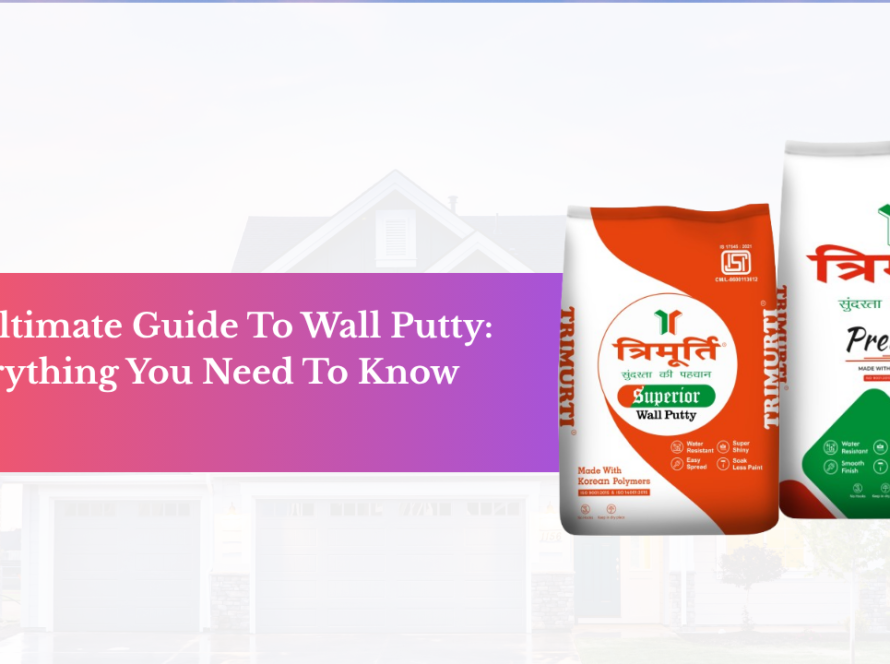
When it comes to building or renovating homes, offices, or commercial spaces, wall finishes play a vital role in aesthetics, durability, and overall performance of the structure. Among the essential construction materials, wall putty has emerged as a must-use product, not just for beautifying walls but also for enhancing structural longevity.
In this 2026 complete guide, we dive deep into the 10 major benefits of wall putty, practical applications, key differences with conventional plaster, real life results via a case study, and why builders and homeowners increasingly choose Trimurti Wall Putty for superior results.
What Is Wall Putty?
Wall putty is a fine, powder-based finishing material primarily composed of white cement, high-quality fillers, performance-enhancing polymers, and special strengthening agents. When mixed with water, it forms a smooth, creamy paste that can be easily applied to interior and exterior walls as well as ceilings. It is typically used after plastering and before painting to create a perfectly even and refined surface.
The primary purpose of wall putty is to fill minor cracks, pores, dents, and surface imperfections that naturally occur in plastered walls. By leveling these irregularities, it ensures a uniform and seamless base coat for paint application. In addition to improving surface smoothness, wall putty also enhances paint adhesion, allowing the paint to bind more effectively to the wall. This results in better color uniformity, improved durability, and a more polished final appearance.
10 Key Benefits of Wall Putty for Modern Construction in 2026
Wall putty has become a fundamental element in contemporary construction and renovation projects. It not only enhances the visual appeal of walls but also improves their strength, durability, and resistance to environmental factors. Below are the 10 key benefits of wall putty, each explained in detail.
1. Smooth and Even Surface Finish
One of the primary benefits of wall putty is its ability to create a smooth and level surface before painting. After plastering, walls often contain minor dents, pores, cracks, and uneven textures. Wall putty fills these imperfections effectively, forming a uniform and refined base. This smooth finish enhances the final appearance of paint and ensures that decorative coatings look professional, clean, and visually appealing across the entire surface.
2. Better Paint Adhesion
Wall putty significantly improves the bonding between the wall surface and paint. Without a proper base, paint may not adhere well to plaster, leading to peeling, flaking, or patchiness over time. Putty acts as an intermediate layer that enhances grip and ensures paint sticks evenly. This improved adhesion increases durability and reduces maintenance requirements, making it an essential step for achieving long-lasting paint performance.
3. Enhanced Paint Durability
Applying wall putty before painting extends the overall life of the paint finish. It reduces paint absorption by creating a consistent base, allowing paint to spread evenly and maintain uniform thickness. This minimizes issues like blistering, cracking, or fading. As a result, walls retain their fresh appearance for a longer period, reducing the need for frequent repainting and ensuring cost savings over time.
4. Moisture Resistance
High-quality wall putty provides resistance against moisture penetration. It forms a protective layer that limits water absorption into the plastered surface. This is especially beneficial in areas exposed to humidity, such as kitchens, bathrooms, and exterior walls. By reducing dampness and preventing issues like efflorescence or paint bubbling, wall putty helps maintain structural integrity and protects walls from long-term water damage.
5. Increased Wall Strength
Wall putty strengthens the wall surface by filling micro-cracks and binding loose plaster particles. This added layer improves the wall’s resistance to minor impacts, surface erosion, and wear. Over time, walls treated with putty are less likely to develop visible damage or deterioration. This reinforcement makes wall putty an important material for enhancing both the durability and structural stability of modern buildings.
6. Cost-Effective in the Long Run
Although applying wall putty adds an additional step in construction, it proves highly economical in the long term. It reduces paint consumption by providing a smooth base and decreases the need for frequent touch-ups or repairs. Because paint lasts longer and surface damage is minimized, overall maintenance costs are lowered. This makes wall putty a smart investment for homeowners, builders, and developers.
7. Improved Aesthetic Appeal
Wall putty enhances the brightness, clarity, and richness of paint colors. Since it creates a uniform white or smooth base, the true shade of the paint becomes more visible and vibrant. Decorative finishes, textured coatings, or premium paint designs appear more refined and consistent. This aesthetic enhancement is especially important in modern construction where visual appeal and interior design play a significant role.
8. Crack Reduction and Surface Stability
Minor cracks and surface irregularities can appear due to drying shrinkage or slight structural movement. Wall putty helps minimize the visibility of such imperfections by filling gaps and creating a stable surface. It reduces stress points on the wall and supports better paint performance. While it does not fix structural cracks, it effectively controls surface-level issues and maintains a neat appearance.
9. Easy Application and Workability
Modern wall putty formulations are designed for easy mixing, application, and sanding. Contractors and painters can apply it smoothly using standard tools without requiring specialized equipment. Its workable consistency allows uniform spreading, reducing labor effort and speeding up project timelines. This efficiency makes it suitable for both small-scale residential projects and large commercial developments where time management is critical.
10. Eco-Friendly and Safe for Indoor Use
Many advanced wall putty products in 2026 are formulated with environmentally responsible materials and low-VOC compositions. This ensures safer indoor air quality during and after application. Reduced harmful emissions make it suitable for homes, schools, offices, and healthcare facilities. As sustainable construction practices gain importance, eco-friendly wall putty supports green building standards and healthier living environments.
Ready to Upgrade Your Walls with Long-Lasting Protection and a Flawless Finish?
Your walls deserve more than just paint, they need a strong, smooth, and durable foundation that ensures beauty and performance for years to come. High-quality wall putty enhances paint adhesion, prevents moisture damage, reduces cracks, and delivers a premium finish that stands the test of time. Whether you’re building a new space or renovating an existing one, choosing the right wall putty makes all the difference.
Connect with our team today and let us help you achieve stronger, smoother, and longer-lasting walls for your next project!
FAQs
1. Does wall putty prevent paint from peeling?
Yes, wall putty plays a crucial role in preventing paint from peeling. It creates a smooth, stable, and uniform base that improves paint adhesion significantly. When paint bonds properly to the surface, issues like flaking, blistering, or early peeling are greatly reduced. High-quality wall putty also minimizes moisture absorption, which is one of the main causes of paint failure over time.
2. Can I apply wall putty on damp walls?
Wall putty should always be applied on clean, dry, and properly cured surfaces. Applying putty on damp walls can trap moisture inside, leading to bubbling, poor adhesion, and reduced durability. If walls have moisture issues, proper waterproofing or damp-proof treatment should be completed first. Once the surface is dry and stable, wall putty can be applied for optimal performance and long-lasting results.
3. How many coats of wall putty are recommended?
In most cases, two coats of wall putty are recommended to achieve a smooth and uniform finish. The first coat fills surface imperfections, while the second coat enhances smoothness and strength. In areas prone to moisture, such as kitchens and bathrooms, two well-applied coats are strongly advised. However, for minor repairs or very smooth surfaces, one coat may sometimes be sufficient.
4. Is wall putty necessary before painting?
While not legally mandatory, wall putty is highly recommended for achieving a professional-quality paint finish. It improves surface smoothness, enhances paint adhesion, reduces paint consumption, and increases durability. Without putty, paint may appear patchy and may not last as long. For modern construction standards and premium finishes, applying wall putty before painting is considered an essential step.
5. How long does wall putty last?
The lifespan of wall putty depends on product quality and application technique. High-quality wall putty, such as Trimurti Wall Putty, can last over 10 years when applied correctly on well-prepared surfaces. Proper curing, correct thickness, and protection from excessive moisture further extend its durability. With minimal maintenance, walls treated with good putty retain their smoothness and structural integrity for many years.

Trimurti Products
Established in 2004, we at Trimurti Products offer a range of wall care products and construction materials designed to transform your living spaces. Having 20+ years of expertise and a team of 200+ experienced professionals, we deliver products that meet the highest standards. Our commitment to quality makes us a trusted partner in wall care solutions.