Living by the sea, especially with beautiful mornings, adds a gentle charm to life. A house in such an area gathers the sharp scent of the wind. The quiet spectacle of endless water and the buzzing life of nearby streets all combine to make everyday existence feel alive.
Yet, the same air and humidity that make sea living so unique also create tough conditions for exterior walls, like the paint will fade sooner, the cracks come a little earlier, and the moisture is incessant. That’s why choosing the right primer before painting is not just helpful but essential.
Most people believe that paint itself would be enough to protect their walls. Painting without primer in a coastal area is fundamentally just like building a house without its foundation. Primer provides an excellent base, enhances adhesion, and protects the surface from humidity, salt, and harsh sunlight.
It has been observed that homes near coastal areas that are not using a primer or use a standard primer instead of a climate-suitable one have to be repainted sooner than inland homes. So, investing time in the selection of the right primer can save not only effort but also money over the years.
This informative blog will help you explore the best paint for the home and also in choosing the right primer for painted exteriors in coastal cities.
Primer: The Foundation of Lasting Paint
Primer is normally an undercoat that is applied to ensure that the paint adheres well and lasts, standing the test of time. Primer creates a smooth layer, stops the paint from peeling, and cuts down on stains. Coastal areas, where the air is thick with moisture and salt, rely on primer to fend off corrosion and the weather.
Some people paint directly with emulsion, distemper, or similar exterior coatings, ignoring the need for a primer first. However, not using a primer most of the time causes faded colours, chalking, and flaking paint. Be it emulsion or distemper paint, primer lays the ground for durability and better finishing.
Know Your Surface Type
These could be made from various types of building material, like masonry, concrete, plaster, or bricks. Others may have gypsum plaster repairs or patched areas coated with wall putty.
Due to this, the primer type would be selected in correspondence to the surface type. If your wall was levelled or smoothed with wall putty, then your primer should be compatible with it. The application of primer on gypsum plaster helps reduce absorbency, hence preventing the topcoat from soaking unevenly.
This also applies to areas wheretile adhesives had been applied. Surface preparation with a primer allows for uniform absorption and improved bonding before painting.
Climate Factors You Should Consider
The air on the coast contains salt particles that settle on the surface. Without primer, these particles seep into the paint layer and therefore weaken it from the inside. With heavy rains and humidity, this process accelerates crack, peeling, and mold growth.
The heat also plays a major role. The coastal regions have strong sunlight, which eventually affects the color and texture of the paint. According to reports, UV exposure on the coast may reduce paint life as much as 40 percent if primer is not used.
Exterior surface primers are specially formulated to be resistant to mould, algae, and the build-up of moisture. When the base is strong,emulsion anddistemper paints work much better and last much longer.
Primer Matching with the Right Paint Type
Some paints pair well with specific primers, while others do not. Whether you pick an emulsion finish or a budget‑friendly distemper for the final coat, and whether the house sits on a salty coastline, the primer you select must work with the paint you plan to use. Think of the primer as the hidden layer that locks in strength and evenness, so you won’t have to worry about wear or uneven spots. When you pick a primer that matches the job, the top paint will hold up nicely, whether you’re tackling premium house paint or a quick coat.
In the case of coastal houses, attention to aesthetic appearance takes second place compared to long-term performance. That is where the selection of a primer from a good manufacturer becomes very important. Trimurti products offer all Care products that provide the basics, wall putty, gypsum plaster, and complementary building products that support paint applications and help them endure. Our line of prep and protective items gives you a solid foundation before you start painting.
Common Mistakes to Avoid
The biggest slip‑ups are coating damp walls and applying primer before dust or salt is cleared away. First, wipe the surface clean, wait until it’s dry, then spread the primer.
In cases where your surface has been repaired by using gypsum plaster, finished with wall putty, or areas where tile adhesives have been used, make sure the surface is prepared prior to priming.
Another error is the use of the wrong type of paint along with primer. Primer provides a high‑quality paint that delivers a finish that clearly beats the look you’d get when you pair primer with budget‑level paint.
Long-Term Benefits of Picking the Right Primer
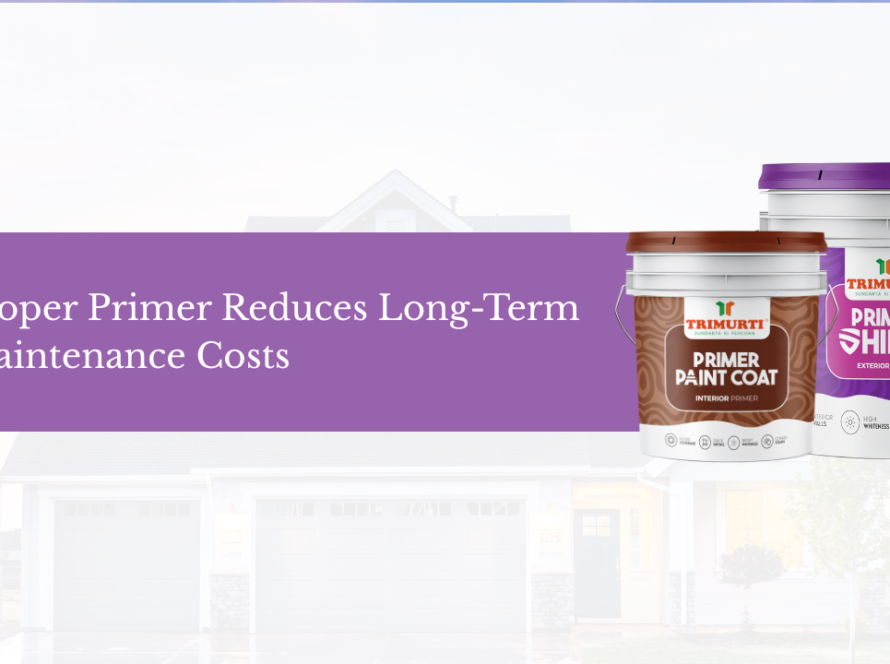
Primer helps to lock in the brilliance of the colour, prevent fungal growth, and lower maintenance costs. It has been observed that houses that apply a correct form of primer would only have to repaint every five to seven years, as opposed to every two to three years without a primer. That means the right primer saves money, but also gives protection to your home that lasts longer.
Make the Right Choice for Your Coastal Home
Painting a home near the coast is not about just selecting colours. You need to understand how weather impacts the surface and how to get the surface ready for it. The right primer, spread evenly, locks onto the surface so your emulsion, distemper, or top-grade paint will stick longer and look better in any room.
The selection of good-quality building materials will make the process of painting reliable and durable. You’ll find that mixing wall putty, gypsum plaster, and tile adhesive from Trimurti Products will give wall care with a robust base, so the paint sticks well and stays fresh longer.
A beautiful coastal home deserves long-lasting protection, and it all starts with choosing the right primer from the Trimurti Products. Explore our best paint for the home collection and get in touch with us for the trusted building solutions for your next project.
FAQ's
1. Do I always need a primer when painting a coastal home?
Yes, primer is needed at the coast because it helps paint resist moisture, salt, and peeling.
2. Can I apply paint directly over the wall putty?
No, primer should be applied over the wall putty before painting. This ensures proper adhesion and longer durability.
3. Is emulsion suitable for external walls facing sea coasts?
Yes, emulsion works quite well if combined with a decent primer along with good surface preparation.
4. How often should exterior paint be refreshed in coastal climates?
With the right primer and paint system, you may repaint every five to seven years instead of more frequently. Primer can be applied to surfaces repaired with gypsum plaster or tile adhesives.
5. Can I use primer on surfaces repaired with gypsum plaster or tile adhesives?
Yes. Primer seals off areas finished with gypsum plaster or tile adhesives so the paint bonds evenly.

Trimurti Products
Established in 2004, we at Trimurti Products offer a range of wall care products and construction materials designed to transform your living spaces. Having 20+ years of expertise and a team of 200+ experienced professionals, we deliver products that meet the highest standards. Our commitment to quality makes us a trusted partner in wall care solutions.